Stuck at 1200 · from the data
Stuck at 1200? Here's what 1200-rated games actually show.
At 1200 you are winning more games than you win. One player-game in five is lost from a winning position, the highest of any level. Here is what 1200-rated games actually contain, counted move by move.
1,041 player-games rated 1100 to 1300, Lichess blitz and rapid, October 2026
What a 1200 game looks like
The numbers at 1200 look like the numbers at 1000: 33 moves a game, 2.5 blunders, 84% of player-games with at least one, accuracy 85.7. Hung pieces are 19% of mistakes, missed threats 31%, judgment 28%. The per-move blunder rate keeps easing, 0.79 per ten moves.
What is different is what the mistakes cost. 19% of 1200-rated player-games were lost from a winning position, a win chance of 75% or better before one of its mistakes, the highest share in the whole table. 77% of losses contain a mistake or blunder made while level or ahead. 29% of all 1200-rated mistakes were made while winning. A 1200 can get winning positions against 1200s, the sample says so; the rating is stuck on the second half of the game.
The three mistakes that decide 1200 games
The report sorts every mistake by what went wrong. At 1200: 31% walked into the opponent's threat, 19% hung a piece, 20% missed a win, 3.0% allowed a mate, and 28% were judgment calls with no material in the line. The first three can be practiced from positions; here they are, with real ones from the sample.
Their threat, missed
31% of 1200-rated mistakes walked into the opponent's idea. The categories are spread: a loose pawn (15.3% of all mistakes), a mate allowed (7.0%, the highest of any band from 1000 up), a fork (7.0%), a pin or skewer (6.1%), a trade counted wrong (5.5%). The mates matter: often it is a winning 1200 who attacks, leaves the back rank, and gets mated in a position that was won.
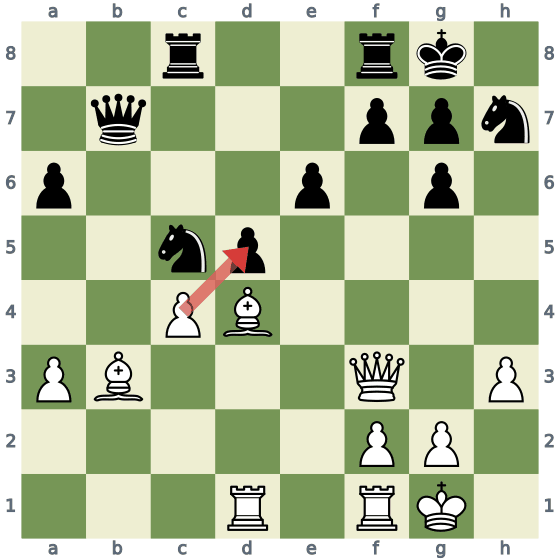
Rated 1218 · Lichess Blitz 3+2 · move 24
White played 24.cxd5, a blunder that left them losing. They went on to lose that game. Find a better move.
Find the better move →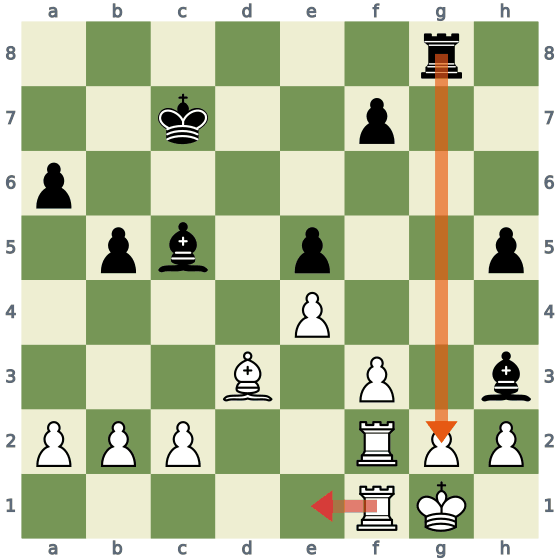
Rated 1387 · Lichess Blitz 5+0 · move 22
White played 22.Re1 and walked into a pin: Black answered Rxg2+, and the win chance went from 73% to 0%. White went on to lose.
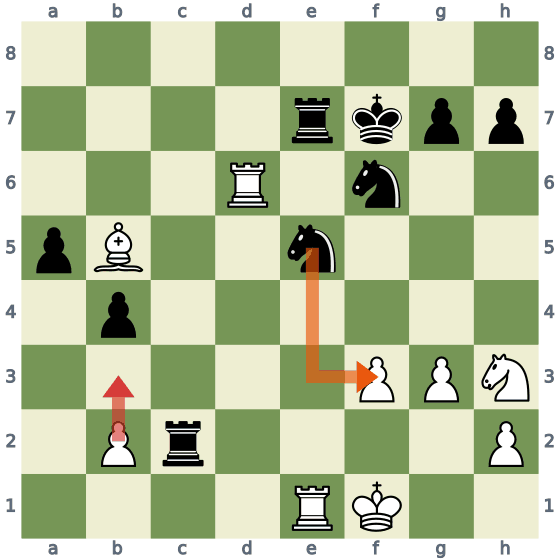
Rated 1213 · Lichess Blitz 4+0 · move 29
White played 29.b3 and walked into a check that won material: Black answered Nxf3, and the win chance went from 76% to 20%.
Positions from the sampled games, shown from the player's side. The red arrow is the move played, the orange arrow the reply that punished it; a link opens the position on the board, where the site tells you whether you found the better move.
Pieces left to be taken
0.57 a game, 15% of mistakes. The rook is now the piece hung most (26%), then the knight (20%) and the queen (22%). They have moved later in the game too: 32% on moves 21 to 30, against 25% at 800. 86% were played with more than a minute on the clock.
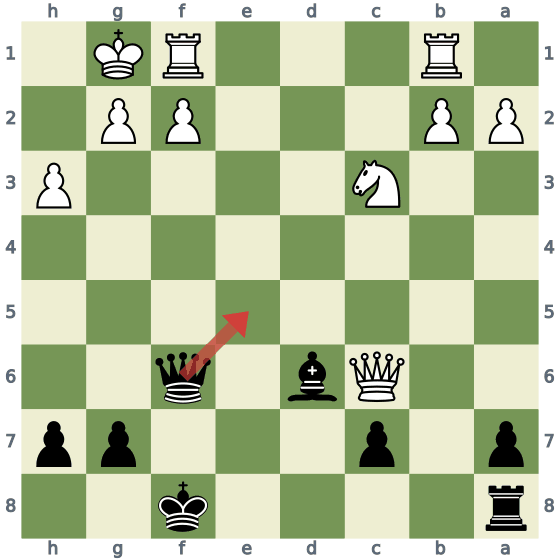
Rated 1239 · Lichess Blitz 3+0 · move 23
Black played 23...Qe5, a blunder that left them losing. They went on to lose that game. Find a better move.
Find the better move →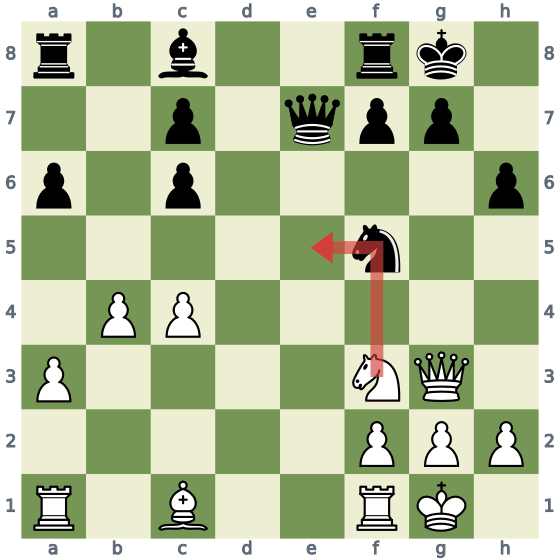
Rated 1391 · Lichess Blitz 3+2 · move 24
White played 24.Ne5, a blunder that left them losing. They went on to lose that game. Find a better move.
Find the better move →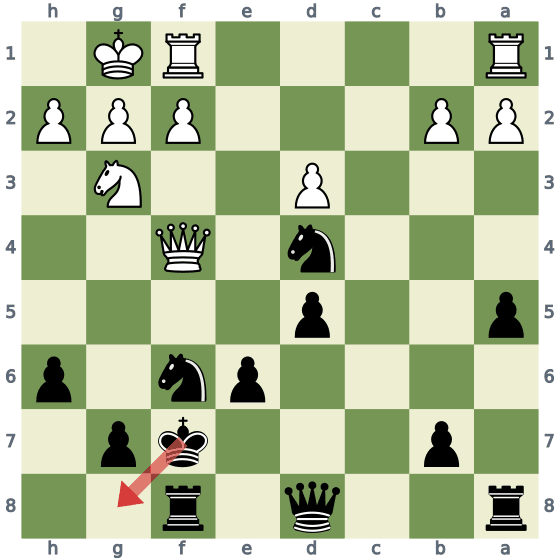
Rated 1321 · Lichess Blitz 5+0 · move 18
Black played 18...Kg8, a blunder that threw away their advantage. Find a better move.
Find the better move →Positions from the sampled games, shown from the player's side. The red arrow is the move played; a link opens the position on the board, where the site tells you whether you found the better move.
The win that was there
20% of mistakes were a win not taken, and the missed mates within them (3.9%) are the highest share of any band above 800. At 1200 the player is attacking, has the mate, and plays the slower move. The positions below are those.
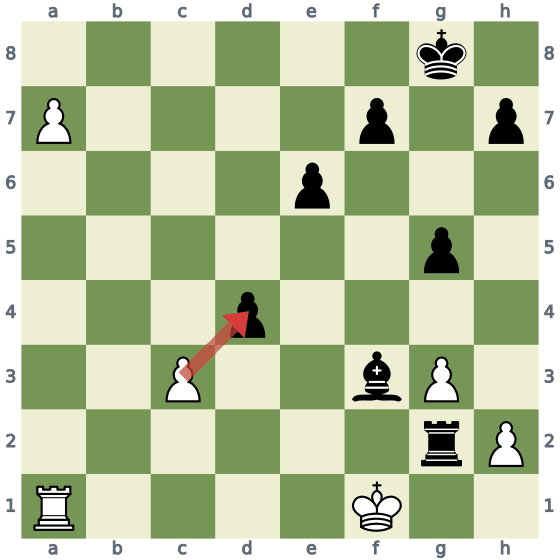
Rated 1364 · Lichess Blitz 5+0 · move 39
White played 39.cxd4, but there was a winning move. Find it.
Find the better move →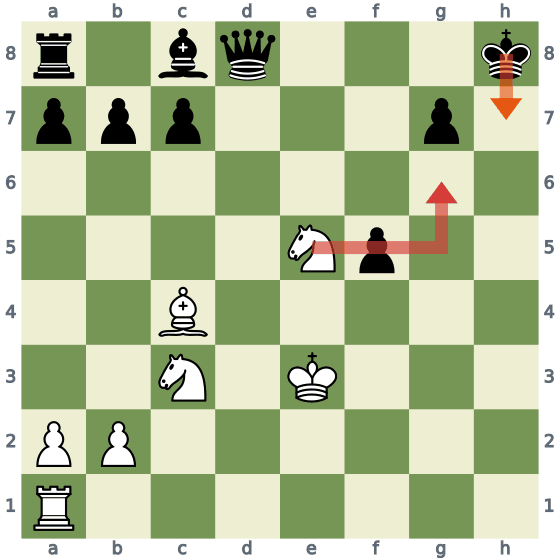
Rated 1300 · Lichess Rapid 10+0 · move 23
White played 23.Ng6+ and missed a mate: Black answered Kh7, and the win chance went from 100% to 13%. White went on to lose.
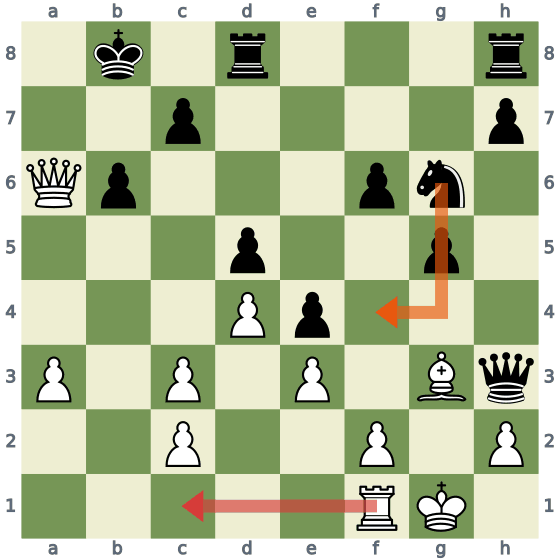
Rated 1316 · Lichess Rapid 10+0 · move 23
White played 23.Rc1 and missed a mate: Black answered Nf4, and the win chance went from 100% to 20%.
Positions from the sampled games, shown from the player's side. The red arrow is the move played, the orange arrow the reply that punished it; a link opens the position on the board, where the site tells you whether you found the better move.
More to solve from this level: chess puzzles by rating, real blunders from the same games.
What to check before you move
When you are winning, look for their one threat.
29% of 1200-rated mistakes were made from a winning position. A won position has one danger, not many: find it, deal with it, then press. Trading a pair of pieces when ahead takes the danger with it.
Checks and captures before the plan, every move.
20% of mistakes were a win left on the board, and at 1200 the missed mates are the highest share of any level above 800. A ten-second scan of every check and capture, yours and theirs, catches most of them.
Back rank, h7, and the piece you just moved away.
Mates allowed are 7.0% of 1200-rated mistakes, the highest from 1000 upward. When a piece leaves the king's side, ask what it was guarding.
The clock: 8% of 1200-rated blunders came under 30 seconds. Not nothing, but not the story either. The story is the second half of won games.
What changes at the next level
From 1200 to 1500 the mistake mix shifts toward judgment (28% to 30%), hung pieces fall to 18% of mistakes, games lost from winning fall to 17%, and the clock stays a small part: 9% of blunders under 30 seconds against 8% here. The 1500 page covers it.
The other levels: 800 · 1000 · 1200 · 1500 · 1800 · the full table · why you keep losing · how to stop hanging pieces · accuracy by rating.
Which one is yours?
These are averages over 1,041 player-games. Your last 75 have their own count, and it is usually lopsided: one of the three is most of your losses. Chess Triage runs the same engine checks over your recent games on Chess.com or Lichess, counts your mistakes by kind, tells you which one costs you most, and emails you the positions to solve on the board. Free, no card, just your username. The sample report is one player's in full.
Check your own games: free chess game analysis · free chess game review · chess blunder checker.
How it works
1. Give us a username
Chess.com or Lichess. No account to make, nothing to install.
2. We go through every move
Your last 75 games, looking for the moments that keep costing you.
3. See what they've been hiding
In your inbox in about 15 minutes, with the positions to solve on the board.
Questions
Why am I stuck at 1200 in chess?
The sample's answer: because of the games you were winning. 19% of 1200-rated player-games were lost from a winning position, the highest share of any level, and 29% of 1200-rated mistakes were made while winning. The habit to build is a threat check every move once you are ahead.
Is 1200 a good chess rating?
On Lichess a 1200 is better than 35% of this week's rated rapid players, a little below the median of 1350; on Chess.com a 1200 rapid is about the 93rd percentile. The per-move blunder rate at 1200 (0.79 per ten moves) is about a quarter below 800's. The mistakes are the same kinds as at 1000; what sets 1200 apart in this data is how often a won game is given back.
How do I get from 1200 to 1500?
Convert. Treat a won position as a position with one threat to find each move, trade pieces when ahead, and keep the checks-and-captures scan going to the end: 20% of 1200-rated mistakes were a win not taken, 3.9% of them mates. Hung pieces (15%) still need the "what can they take?" check.
Do 1200-rated players hang pieces?
Yes: 0.57 a game, 15% of all 1200-rated mistakes, the rook most often (26% of them). 86% of those were played with more than a minute on the clock, so they are a habit, not a scramble.
Which games were counted?
1,041 player-games by players rated 1100 to 1300 on Lichess in October 2026, rated blitz and rapid, every move after move 10 checked by Stockfish with the report's settings.
What percentile is a 1200 rating?
On Lichess, a 1200 rapid player is better than 35% of this week's rated players (28% in blitz); on Chess.com, a 1200 rapid is about the 93rd percentile of members, because the two sites count different people and the same player is rated 300 to 400 points higher on Lichess. The percentiles page has every rating on both sites. The numbers on this page are Lichess ratings; Chess.com players should read the page for the band above theirs.
Is it really free?
Yes. We're building a training tool around these reports and want honest feedback from real players. No card, no trial.
Do you need my password?
Never. Your games on Chess.com and Lichess are public; we read them through the sites' official APIs. We only need your username and an email to send the report to.
Find out which of the three is yours.
Free report from your last 75 games on Chess.com or Lichess, in your inbox in about 15 minutes.
Get my free report