Free chess game review and analysis for Chess.com and Lichess
A free chess game review of your last 75 games.
Give us your username. We analyze every move of your last 75 games, count the mistakes that keep costing you, and email you the positions to solve on the board. One review of all 75 together, where other tools review one game at a time. Free, in about 15 minutes.
What a chess game review is, and what this one adds
A game review runs a chess engine over a finished game and marks the moves that changed the result: the blunders, the mistakes, and the wins that were on the board and not played. Chess.com's Game Review does that for one game, with a label on every move, an accuracy score and a coach's comments. Lichess's computer analysis does it for one game, with an evaluation graph and a mode that replays your mistakes.
Both answer the same question: what happened in this game? This review answers the next one: what keeps happening? It analyzes your last 75 games the same way, move by move, and then adds them up. The mistake that costs you most is rarely the one in last night's game. It is the one that is in twelve of them, and you can only see it when the games are reviewed together.
What's in your review
The numbers below are from one real review, a player's last 75 Lichess blitz games. The sample report shows it in full.
Every blunder, counted
146 blunders in 56 of 75 games. The engine checks every move after the opening, and a blunder is a move that cost 15 or more points of winning chance. One threshold for every game, so the count means something.
Sorted by what went wrong
A hanging piece, a fork, a pin, a mate allowed, a win missed, a trade counted wrong: 14 kinds in all. Then the piece you leave hanging most. In this review: rooks 23 times, bishops 14.
The games that got away
16 games lost from a winning position, and 4 more drawn. 22 of the 36 losses had a mistake or blunder made while level or ahead. Those are the rating points a review should find first.
The positions, to solve
The moments most worth your time, each shown just before the move you played. Find the better move on the board; the site tells you whether you have it and shows the engine's line.
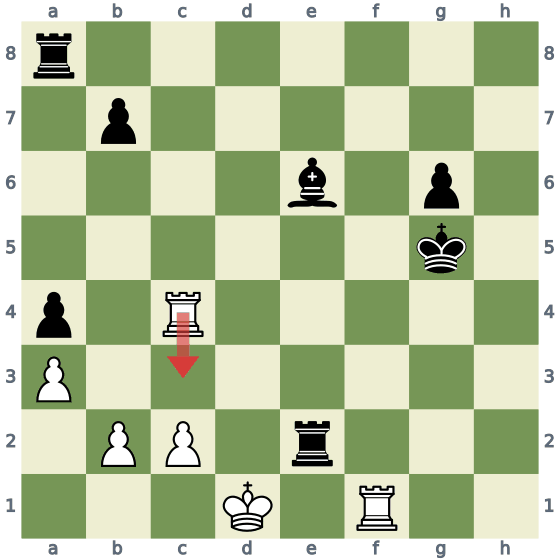
From the sample report · A win that was there
You played 40.Rc3, but there was a winning move. Find it.
See the whole report →Reviewing one game: the free options
If you have just finished a game and want to see where it turned, these are quicker than we are. All of them review one game at a time, on the spot.
- Chess.com Game ReviewOne full review a day on a free account, unlimited from Platinum. Move labels, accuracy, and coach comments on Diamond.
- Chess.com analysis boardFree for every game you play there: the engine's evaluation, best-move arrows and the move list, without the labels.
- Lichess computer analysisFree for up to 40 games a day, for Lichess games and for any PGN you paste in. Mistakes marked, accuracy, and Learn from your mistakes.
- WintrChess and ChessigmaFree reviews with Chess.com-style move labels, from a username or a pasted PGN.
Our comparison of the free game review tools goes through what each one gives you and what it leaves out. Use them for the game you just played. Use this for the pattern across the last 75, which none of them show.
How the game analysis works
The analyzer is a chess engine, the same kind of tool behind the reviews on Lichess and Chess.com. We fetch your recent rapid and blitz games from the site's public API and evaluate every move after move 10. A move that cost 15 or more points of winning chance is a blunder, and 10 or more is a mistake: Lichess's thresholds, the same in every game.
Each one is then sorted by what happened on the board, and the positions that make your report are checked a second time, more deeply. A position only becomes a puzzle if one move is clearly better than the rest, so the answer is never a matter of taste. The methodology page has the details.
What you won't get: brilliant-move badges, an accuracy score, opening advice, or a comparison with other players. The review is your games, counted, and the positions to practice.
Try three positions from a real review
These come from the sample report. The ones in your review come from your own games and work the same way.
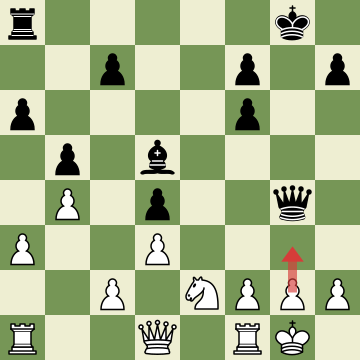
19.g3 was played here, from a winning position, and it allowed mate in two. Find a move that holds.
White to move · Solve it →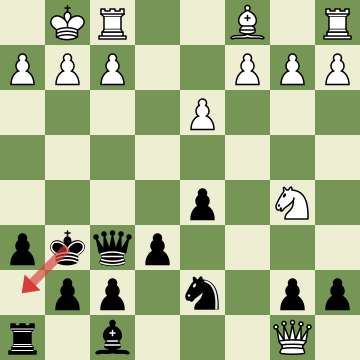
17...Kh7 let a winning position go. There was a move that wins.
Black to move · Solve it →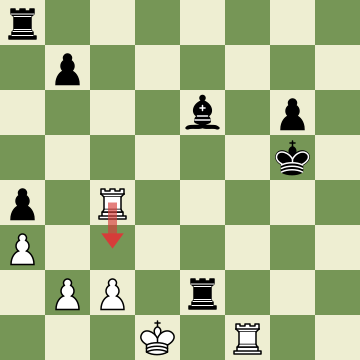
40.Rc3 let a winning position go. One check would have won material.
White to move · Solve it →Related: how to analyze your own games by hand · what counts as a blunder · how to get better at chess · chess mistakes by rating.
See also: free chess game analysis · chess blunder checker.
How it works
1. Give us a username
Chess.com or Lichess. No account to make, nothing to install.
2. We go through every move
Your last 75 games, looking for the moments that keep costing you.
3. See what they've been hiding
In your inbox in about 15 minutes, with the positions to solve on the board.
Questions
Is it really free?
Yes. We're building a training tool around these reports and want honest feedback from real players. No card, no trial.
Does it review Chess.com games and Lichess games?
Both. Pick the site, give us the username, and we fetch your recent public games through the site's official API. There is no PGN to upload and no account to connect.
Can it review a single game?
Not here. The review reads your most recent games together and doesn't take one game you pick. For a single game, Lichess's computer analysis is free (up to 40 games a day), and it accepts a pasted PGN from Chess.com too.
How is it different from Chess.com Game Review?
Game Review explains one game: a label on each move, an accuracy score, and on Diamond a coach's comments. Free accounts get one a day. This reads up to 75 of your games together, counts the mistakes that repeat, and emails you the positions to practice. It gives no move labels and no accuracy score. How the free game review tools compare.
How are the games analyzed?
A chess engine checks every move at a fixed depth that is the same for every game, and the positions in your report are checked again more deeply. The methodology page has the details.
How long does the review take?
It usually arrives by email in about 15 minutes, at most 24 hours. Analyzing 75 games move by move takes the engine about ten minutes, and the report is checked before it goes out, so it isn't instant.
Which games do you look at?
Your most recent rapid and blitz games against people, rated or casual, up to 75. If you have fewer than 30 of those, we add your classical and daily games. We skip bullet, games against bots, and Chess960 or games from a set-up position.
Do you need my password?
Never. Your games on Chess.com and Lichess are public; we read them through the sites' official APIs. We only need your username and an email to send the report to.
Get your games reviewed.
Free report from your last 75 games, in your inbox in about 15 minutes.
Get my free report