Free, from your Chess.com or Lichess games
Chess puzzles from your own games.
Every puzzle is a position you actually reached, just before the move that cost you. We find them in your last 75 games, pick the ones worth solving, and email them to you free in about 15 minutes. The site grades your answer and shows the engine's line.
Why your own games make better puzzles
A puzzle from a puzzle set tells you a tactic exists. A puzzle from your own game tells you that you missed it, in a position you chose to play into, with the clock you had. You know the position already. You remember the move you played. Finding the better one is the lesson, and it sticks because it's yours.
Three kinds of moment go into the report: a move that turned a winning game into a lost one, a move that threw away an advantage, and a position where a winning move was there and you played something else. Each comes with what it was about: a hanging piece, a fork, a mate threat, a pin.
How a puzzle works
The board is yours
The position just before your move, from your side. The red arrow is what you played. The report tells you only what kind of moment it was, so the answer is still yours to find.
Find the better move
Play it on the board. The site tells you whether you have it, shows the reply that punished your move, and gives the engine's line for the move it wanted.
Then play it out
Keep going against the engine from there, as many times as you like, and step through the rest of the real game to see how it actually went.
Try three
These come from the sample report, one player's last 75 Lichess blitz games. Yours work the same way.
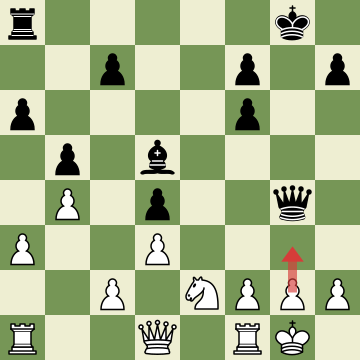
19.g3 was played here, from a winning position, and it allowed mate in two. Find a move that holds.
White to move · Solve it →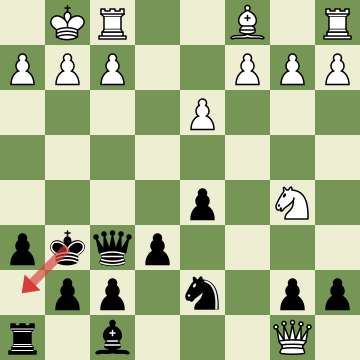
17...Kh7 let a winning position go. There was a move that wins.
Black to move · Solve it →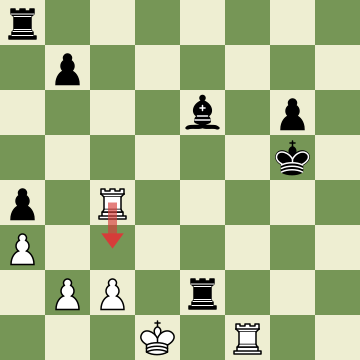
40.Rc3 let a winning position go. One check would have won material.
White to move · Solve it →And one a day, from someone else's game
The Daily Blunder is one position a day from a real rated game, with the answer the morning after. Free, no signup. Every past day is in the archive, sorted by what went wrong, so you can drill the forks on their own, or the back-rank mates.
Check your own games: free chess game analysis · free chess game review · chess blunder checker.
How it works
1. Give us a username
Chess.com or Lichess. No account to make, nothing to install.
2. We go through every move
Your last 75 games, looking for the moments that keep costing you.
3. See what they've been hiding
In your inbox in about 15 minutes, with the positions to solve on the board.
Questions
Is it really free?
Yes. We're building a training tool around these reports and want honest feedback from real players. No card, no trial.
How many puzzles do I get?
The report shows the positions most worth your time, usually five, each with its board and link. It also tells you how many more positions your games hold. The sample report has five from 75 games.
Are the puzzles rated or timed?
No. There's no rating to climb and no clock. Each one is a position from your own game with one job: find the move you didn't.
Can I get puzzles from one particular game?
Not yet. The report works from your most recent games together, so the positions it picks are the ones that matter across your play, not the ones from a game you choose.
Can I keep practicing after the report?
The positions in your report stay solvable on the site for as long as you like. We're building a place to practice every position from your games, not just the ones in the email, and we'll email you when it's ready.
Which games do you look at?
Your most recent rapid and blitz games against people, rated or casual, up to 75. If you have fewer than 30 of those, we add your classical and daily games. We skip bullet, games against bots, and Chess960 or games from a set-up position.
Do you need my password?
Never. Your games on Chess.com and Lichess are public; we read them through the sites' official APIs. We only need your username and an email to send the report to.
Solve the positions that cost you.
Free report from your last 75 games, in your inbox in about 15 minutes.
Get my free report