Checkmate · from the data
How to stop getting checkmated.
Allowing mate is the smallest of the big mistakes and the most final. We took every move in a month of rated Lichess games that let the opponent force checkmate, 881 of them from 400 to 2400, and looked at what the move was, what the mate was, how fast it came and whether the player was winning when they allowed it. Then the two checks that would have stopped most of them.
881 allowed mates, 11,436 player-games, Lichess blitz and rapid, October 2026
How often it happens, and how fast
An allowed mate here is the report's definition: a move after which the opponent has a forced checkmate (the engine finds it) from a position where they didn't before. It is 2.9% of all mistakes and blunders in the sample, 4.3% at 400 and 1.7% at 2000, but as the move that decides a lost game it is bigger than that: 11% of losses at 800, 8% at 1000, 8% at 1200, falling to 3% at 2400 and above. The losing page has the full table.
It is fast. 63% of the games where a mate was allowed ended in checkmate on the board (the rest were resigned or lost on time first), and of those, 61% were mated on the very next move, 20% in two. The move that allowed mate was, most of the time, the move before the mate: a mate in one was on the board and the player looked elsewhere.
| Rating | Mates | Next move | Queen | Rook | Back rank | King home | Was winning | Already lost | Over 1 min |
|---|---|---|---|---|---|---|---|---|---|
| 400 to 800 | 312 | 66% | 71% | 21% | 31% | 80% | 27% | 42% | 90% |
| 1000 to 1400 | 300 | 55% | 62% | 30% | 30% | 75% | 21% | 43% | 77% |
| 1600 and up | 269 | 63% | 60% | 30% | 25% | 70% | 15% | 48% | 57% |
| All | 881 | 61% | 65% | 27% | 29% | 75% | 22% | 44% | 76% |
Next move: mated on the move after the one that allowed it. Queen, Rook: the piece that delivered mate. Back rank: the king on its first rank, mated along it by a rook or queen. King home: the king still on its first rank. Those four are shares of the games that ended in mate on the board; the last three are shares of all allowed mates.
What the mate was
The queen delivers it: 65% of the mates, 71% below 1000. Rooks 27%, everything else 8%. The king was still on its home rank in 75% of the mates, and the classic back-rank mate, a rook or queen landing on the first rank with the king walled in by its own pawns, was 29% of them overall and 31% below 1000. The rest were mostly the queen arriving next to the king with support, on g7, h7, g2, h2, f7, f2, with the king still castled and unmoved.
And what the allowing move was: a king move 21% of the time (stepping into the net, or away from a defender), a rook move 22% (the rook leaving the back rank or the defense of a square), a pawn move 17% (opening the king's cover), a queen move 18%. The piece that moved was usually a defender leaving, not an attacker arriving.
Two kinds of player allow mate. 44% were already lost and allowed a faster end; that is resignation by other means and not worth studying. But 27% were winning or better when they did it, and 19% were level. Below 1000, 27% of allowed mates came from a winning position: the player was a piece up, pushing, and the opponent's queen and rook were still on the board.
What it looks like
Three from players rated under 1000, three from 1000 to 1400, three from 1600 and above.
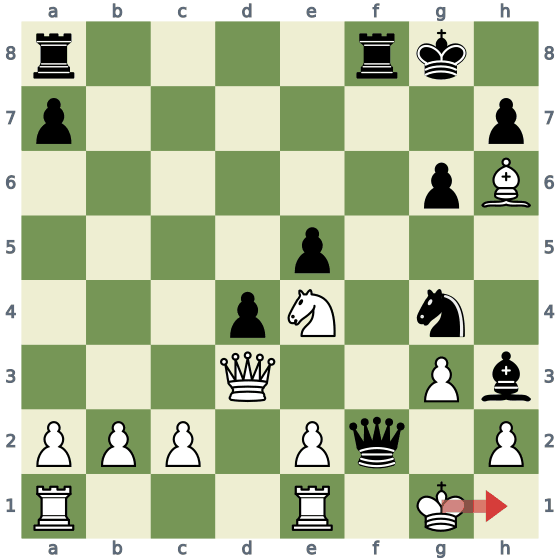
Rated 575 · Lichess Blitz 5+3 · move 23
White played 23.Kh1, a blunder that turned a winning game into a losing one. They went on to lose that game. Find a better move.
Find the better move →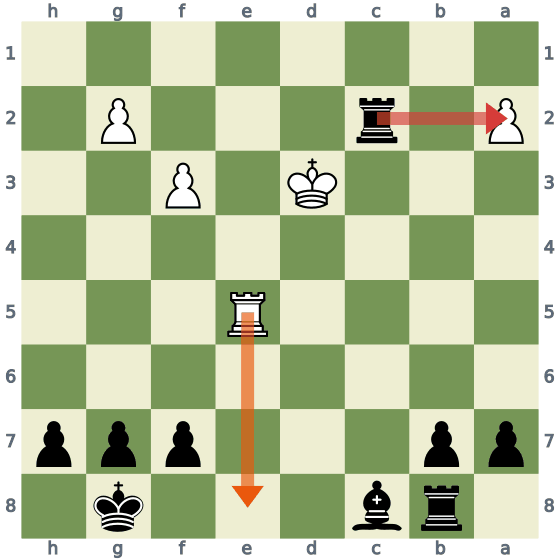
Rated 533 · Lichess Rapid 10+0 · move 32
Black played 32...Rxa2 and allowed a mate: White answered Re8#, and the win chance went from 93% to 0%.
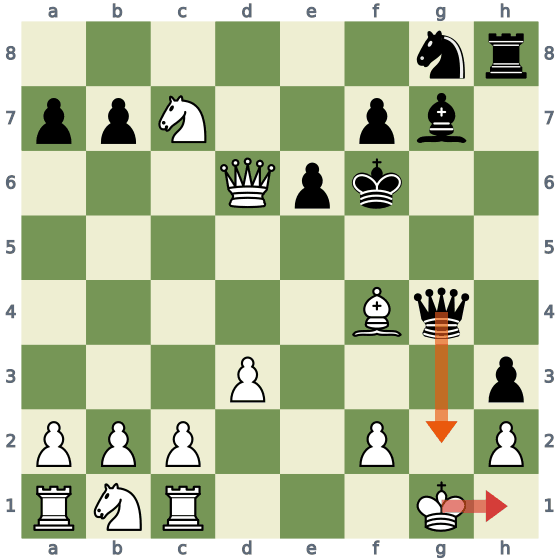
Rated 588 · Lichess Rapid 10+0 · move 22
White played 22.Kh1 and allowed a mate: Black answered Qg2#, and the win chance went from 90% to 0%. White went on to lose.
Positions from the sampled games, shown from the player's side. The red arrow is the move played, the orange arrow the reply that punished it; a link opens the position on the board, where the site tells you whether you found the better move.
From 1000 to 1400:
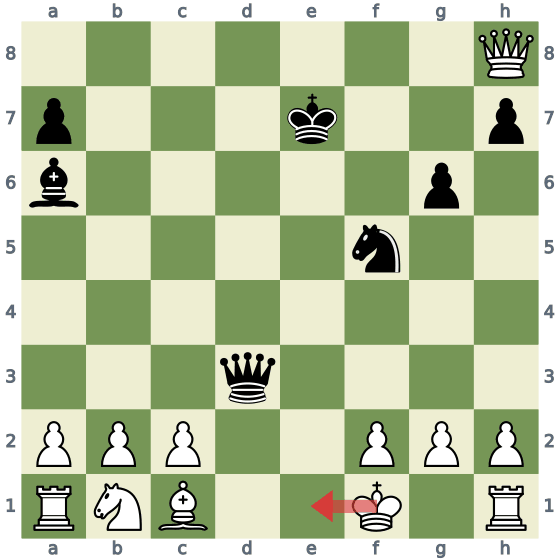
Rated 1013 · Lichess Rapid 10+0 · move 18
White played 18.Ke1, a blunder that turned a winning game into a losing one. Find a better move.
Find the better move →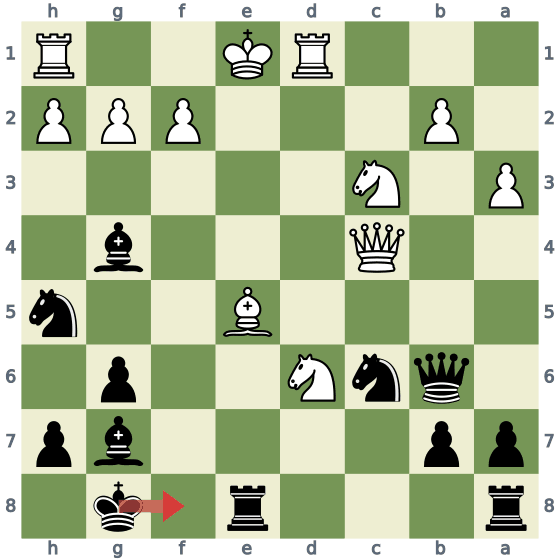
Rated 1196 · Lichess Blitz 3+2 · move 19
Black played 19...Kf8, a blunder that turned a winning game into a losing one. They went on to lose that game. Find a better move.
Find the better move →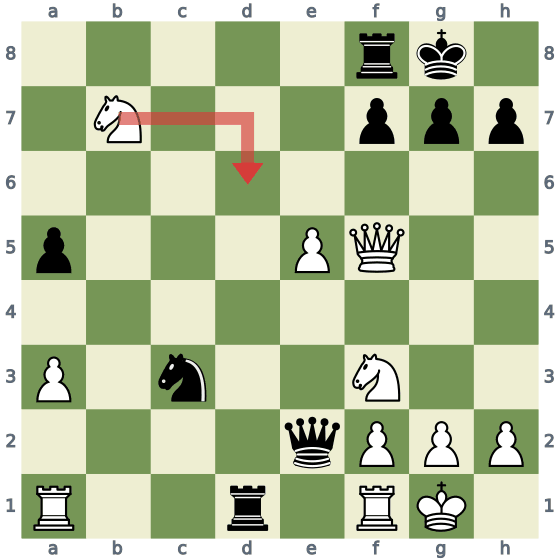
Rated 1595 · Lichess Blitz 5+0 · move 23
White played 23.Nd6, a blunder that turned a winning game into a losing one. Find a better move.
Find the better move →Positions from the sampled games, shown from the player's side. The red arrow is the move played; a link opens the position on the board, where the site tells you whether you found the better move.
From 1600 and above:
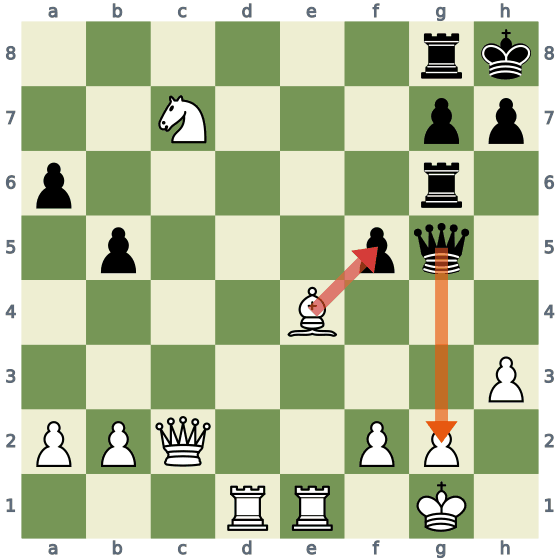
Rated 1771 · Lichess Blitz 3+0 · move 33
White played 33.Bxf5 and allowed a mate: Black answered Qxg2#, and the win chance went from 94% to 0%. White went on to lose.
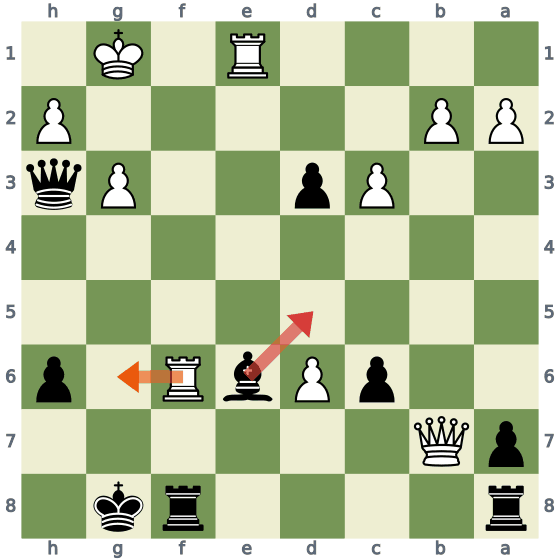
Rated 1947 · Lichess Blitz 5+0 · move 24
Black played 24...Bd5 and allowed a mate: White answered Rg6+, and the win chance went from 91% to 0%. Black went on to lose.
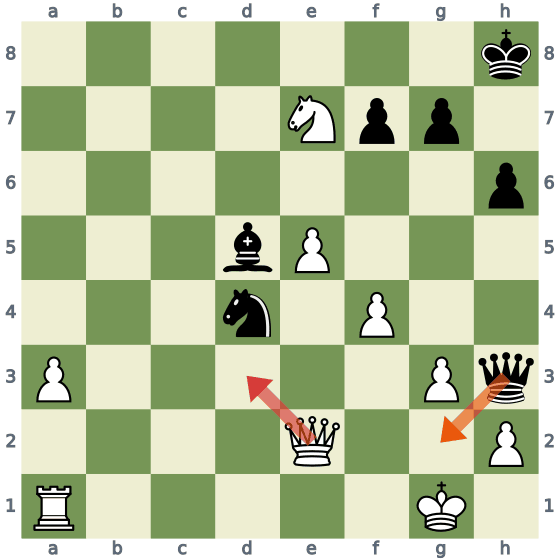
Rated 1690 · Lichess Rapid 10+0 · move 35
White played 35.Qd3 and allowed a mate: Black answered Qg2#, and the win chance went from 84% to 0%. White went on to lose.
Positions from the sampled games, shown from the player's side. The red arrow is the move played, the orange arrow the reply that punished it.
The two checks
Before every move: can they give check, and where does my king go?
61% of the mates were on the board one move before. List every check the opponent has after your intended move. For each one, name the square your king would go to. If there isn't one, you have found the mate before they do. It takes five seconds and 76% of allowed mates had more than a minute to spend on it.
While the queens are on, give the king a square.
75% of the mates found the king on its home rank and 29% were back-rank mates. A pawn move (h3 or h6, or a6 after queenside castling) that gives the king an escape square removes the back-rank mate entirely, and the rook that was tied to guarding the first rank is freed. The same rule covers the queen mates on g7 and h7: ask which of your pieces is defending the squares next to your king, and don't move it without a replacement.
What the data says is not the cause: time (24% under a minute overall, 10% below 1000) and bad positions (46% of allowed mates came from level or better). A mate is allowed by a player who stopped asking what the opponent's checks do, usually because they were busy winning.
How many of yours end this way?
The report counts every mate you allowed in your last 75 games on Chess.com or Lichess, how far ahead you were when you allowed it, and the mates you missed against your opponents, and gives you the positions to solve on the board. Free, no card, just your username.
Related: how to stop getting forked · how to stop hanging pieces · why you keep losing · Daily Blunder: checkmates.
Check your own games: free chess game analysis · free chess game review · chess blunder checker.
How it works
1. Give us a username
Chess.com or Lichess. No account to make, nothing to install.
2. We go through every move
Your last 75 games, looking for the moments that keep costing you.
3. See what they've been hiding
In your inbox in about 15 minutes, with the positions to solve on the board.
Questions
Why do I keep getting checkmated?
Because the mate was one move away and you were looking at your own attack. In 881 allowed mates from rated Lichess games, 61% of the games that ended in mate ended on the next move, 76% of the allowing moves had over a minute on the clock, and 46% were played from a level or better position. The fix is one habit: before you move, list their checks and name your king's square for each.
How common are back-rank mates?
29% of the mates in the sample, and 31% below 1000. The king was on its home rank in 75% of all the mates, so most of the rest were queen mates on g7, h7, g2, h2, f7 or f2 against a castled king.
Which piece delivers checkmate most?
The queen, 65% of the time (71% below 1000); the rook 27%. Knights, bishops and pawns together deliver 8%.
Is it a time pressure problem?
Mostly not. 76% of allowed mates had more than a minute on the clock overall and 90% below 1000. Above 1600 it is closer to half, because those games are mostly three-minute blitz.
How do I stop allowing mate when I'm winning?
27% of allowed mates came from a winning or better position. When you are ahead and the opponent still has a queen and a rook, give your king an escape square, keep one piece near it, and trade queens when you can. Then the check question before every move: can they give check, and where does my king go?
Is it really free?
Yes. We're building a training tool around these reports and want honest feedback from real players. No card, no trial.
Do you need my password?
Never. Your games on Chess.com and Lichess are public; we read them through the sites' official APIs. We only need your username and an email to send the report to.
Find out how many of your losses end this way.
Free report from your last 75 games on Chess.com or Lichess, in your inbox in about 15 minutes.
Get my free report